Voyager 1 Reaches One Light-Day From Earth
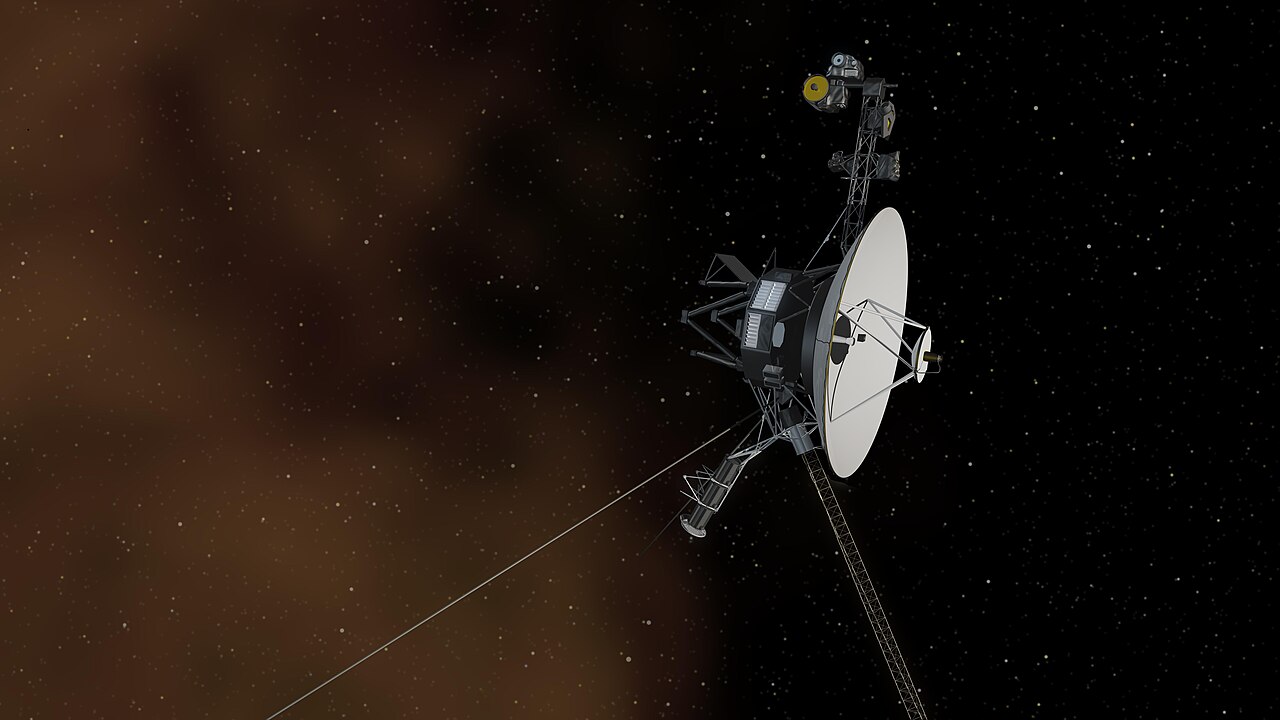
What happened: On Wednesday 18 November 2026, at 5:16:07 a.m. EST (10:16:07 UTC), NASA's Voyager 1 crossed one light-day from Earth — about 16.1 billion miles (25.9 billion km) away. It is the first human-made object ever to reach that distance, according to NASA's Jet Propulsion Laboratory.
On Wednesday 18 November 2026, a spacecraft about the size of a small car, launched before most people alive today were born, crossed a line no human-made object had ever crossed before. NASA's Voyager 1 reached one light-day from Earth — about 16.1 billion miles (25.9 billion km) away — becoming the first object built by human hands to travel that far from home.
The moment came at 5:16:07 a.m. EST (10:16:07 UTC), according to NASA's Jet Propulsion Laboratory (JPL), which operates the mission. Because the spacecraft is still moving outward at about 38,000 mph (61,000 km/h) relative to the Sun, the crossing is permanent: Voyager 1 will never be closer than one light-day again.
NASA Administrator Jared Isaacman said: "Voyager 1 is now one light-day from Earth, an extraordinary NASA achievement for a spacecraft assembled by human hands and launched nearly 50 years ago." JPL planetary scientist Linda Spilker, who has worked on the mission since 1977, said: "When I was first working on Voyager back in 1977, I never expected Voyager 1 to reach one light-day." NASA is holding a public briefing on Thursday 19 November 2026 at 12 p.m. EST with NASA leadership and mission members, and a NASA+ Voyager documentary is planned for 2027, for the mission's 50th anniversary.
What Is a Light-Day
A light-day is the distance light travels in 24 hours. It is a unit of distance, not a unit of time, and astronomers use it in the same way they use light-years: to describe distances so large that miles and kilometres stop being useful. One light-day is about 16.1 billion miles (25.9 billion km) — the distance Voyager 1 reached on 18 November 2026.
The simplest way to feel the scale is to think about radio signals. A radio signal from Voyager 1 now takes 24 hours to reach Earth, travelling at the speed of light the whole way. That means a command sent from Earth today reaches the spacecraft tomorrow, and its reply arrives the day after that: a round trip of about 48 hours.
It helps to keep this milestone in proportion. A light-year — the distance light travels in a year — is about 365 light-days, so Voyager 1 is one light-day away, not one light-year away. And one light-day is a distance milestone, not a new physical boundary: the spacecraft does not enter a new region there. The real boundary crossing came much earlier, in 2012, when Voyager 1 entered interstellar space.
The Moment It Happened
The crossing happened on Wednesday 18 November 2026 at 5:16:07 a.m. EST, which is 10:16:07 UTC. NASA's Jet Propulsion Laboratory, which has operated Voyager 1 since launch, confirmed the time and the distance: about 16.1 billion miles (25.9 billion km) from Earth. No human-made object had ever been that far away before, and no other object is close to matching it.
NASA marked the occasion in the days around the crossing. On Tuesday 17 November, after sunset, NASA asked the public to send a light signal into space — shining a light upward as a small, shared gesture toward a spacecraft that has been travelling away from Earth for nearly half a century. The next day the milestone itself arrived, and on Thursday 19 November 2026 at 12 p.m. EST, NASA is holding a public briefing with NASA leadership and mission members to discuss what the crossing means.
The two quotes NASA shared with the announcement capture why the moment matters to the people who built and run the mission. Administrator Jared Isaacman called it "an extraordinary NASA achievement for a spacecraft assembled by human hands and launched nearly 50 years ago". Linda Spilker, a JPL planetary scientist who has worked on Voyager since 1977, was more personal: "When I was first working on Voyager back in 1977, I never expected Voyager 1 to reach one light-day."
A 49-Year Journey
Voyager 1 was launched on 5 September 1977 from Cape Canaveral, Florida, 16 days after its twin, Voyager 2, which launched on 20 August 1977. The two spacecraft were built as a pair, and their original mission was a modest one by today's standards: fly past Jupiter and Saturn, take photographs and measurements, and send the data home. Nobody planning that mission in 1977 expected either spacecraft to still be operating in 2026, let alone to be the farthest human-made objects in existence.
The mission grew as the spacecraft kept working. After the Jupiter and Saturn flybys, Voyager 1 kept flying outward, past the outer planets and toward the edge of the Sun's influence. On 17 February 1998, it became the most distant human-made object, passing Pioneer 10, an earlier NASA probe that had held the record until then. From that day on, no other object built by humans has ever been farther from Earth than Voyager 1.
The biggest crossing of the journey came on 25 August 2012, when Voyager 1 crossed the heliopause and became the first spacecraft to enter interstellar space — the space between the stars, beyond the bubble of solar wind that surrounds our Solar System. Voyager 1 and Voyager 2 are the only spacecraft operating outside the heliosphere, and everything they report now comes from a region no spacecraft had ever visited before them.
The numbers behind the journey are hard to picture. Voyager 1 is travelling at about 38,000 mph (61,000 km/h) relative to the Sun, and its distance from Earth is now more than four times the distance from the Sun to Pluto.
Both Voyager spacecraft also carry the Golden Record — gold-plated copper discs carrying sounds and images of Earth. The records were placed aboard as a message from humanity, travelling with the spacecraft into interstellar space.
What Voyager 1 Is Still Doing
Nearly 50 years after launch, Voyager 1 is still travelling outward and still in contact with Earth. That alone is extraordinary: the spacecraft was designed for a flyby mission lasting a few years, and it has now been operating for 49 years in conditions far harsher than anything its designers planned for. Every signal it sends takes a full day to reach us, and every command we send takes a full day to reach it, yet the link between Earth and the spacecraft still works.
The spacecraft is running on far less than it started with. Eight of its original 10 instruments are no longer operating, switched off over the years as power declined and parts wore out. What remains is a spacecraft operating on a shrinking budget of electricity, still moving away from the Sun at about 38,000 mph and still sending back signals from interstellar space — the only human-made object doing so from that far away, alongside its twin.
That twin is still following. Voyager 2, launched 16 days before Voyager 1, is also operating outside the heliosphere, and it is expected to reach one light-day from Earth in November 2035 — about nine years behind Voyager 1 on this milestone.
How Much Longer Can It Last
The honest answer is that nobody knows exactly, but the limits are clear. Voyager 1's power comes from a plutonium-238 source that degrades a little each year, so the spacecraft has slightly less electricity available with every passing year. That is why eight of its original 10 instruments have already been switched off: as power fades, the mission team has to choose what keeps running and what does not.
NASA hopes to keep at least one instrument running into the early 2030s. That would take the mission past its 55th year in space — more than a decade beyond the point where many missions would have been written off, and a remarkable return on a spacecraft built in the 1970s. The one-light-day milestone of November 2026 is therefore not just a record; it is also a measure of how much life this old spacecraft still has in it.
Voyager 2 is expected to reach one light-day from Earth in November 2035. Until then, Voyager 1 remains alone at this distance — the only human-made object ever to have travelled a full light-day from home.
Why It Matters
One light-day is, in the end, a number — a distance, not a destination. Voyager 1 did not enter a new region when it crossed it, and nothing about the space around the spacecraft changed at 5:16:07 a.m. EST on 18 November 2026. But the number matters because of what it measures: how far human hands have reached. No object built by people has ever been farther from Earth, and the gap grows by about 38,000 miles every hour.
It also matters because of how long the journey took to get here. Voyager 1 was launched in 1977, when its builders could not have known it would still be flying in 2026. It passed Pioneer 10 in 1998, entered interstellar space in 2012, and reached one light-day in 2026 — each milestone arriving years, and then decades, after the mission was supposed to end. The spacecraft has outlived its original purpose many times over, and each new record is a reminder that well-built machines can keep working long after their planned lifetimes.
For now, the mission goes on. One light-day from Earth, Voyager 1 is still flying, still in contact, and still — nearly 50 years after launch — the farthest thing humans have ever sent into the dark.
Frequently Asked Questions
What is a light-day?
A light-day is the distance light travels in 24 hours. It is a unit of distance, not time. Voyager 1 reached one light-day from Earth on 18 November 2026, when it was about 16.1 billion miles (25.9 billion km) away.
How far away is Voyager 1 now?
About 16.1 billion miles (25.9 billion km) from Earth, according to NASA's Jet Propulsion Laboratory. That is the distance it reached on 18 November 2026, and it keeps growing because Voyager 1 is still travelling outward at about 38,000 mph (61,000 km/h) relative to the Sun.
When did Voyager 1 reach one light-day from Earth?
On Wednesday 18 November 2026 at 5:16:07 a.m. EST (10:16:07 UTC), according to NASA's Jet Propulsion Laboratory. It is the first human-made object ever to reach that distance.
Is Voyager 1 one light-year from Earth?
No. A light-year is about 365 light-days, so one light-day is a much smaller distance than one light-year. Voyager 1 is one light-day away, not one light-year away, and reaching one light-day is a distance milestone, not a new physical boundary — the spacecraft does not enter a new region there.
When was Voyager 1 launched?
Voyager 1 was launched on 5 September 1977 from Cape Canaveral, Florida, 16 days after its twin, Voyager 2, which launched on 20 August 1977. Its original mission was to fly past Jupiter and Saturn. On 17 February 1998 it became the most distant human-made object, passing Pioneer 10.
When did Voyager 1 enter interstellar space?
On 25 August 2012, Voyager 1 crossed the heliopause and became the first spacecraft to enter interstellar space. Voyager 1 and Voyager 2 are the only spacecraft operating outside the heliosphere.
How long does a signal from Voyager 1 take to reach Earth?
About 24 hours one way, so a round trip — a command from Earth and Voyager 1's reply — takes about 48 hours. The signals travel at the speed of light, and the distance is now so great that a full day passes before a message arrives.
How much longer will Voyager 1 keep working?
Power comes from a plutonium-238 source that degrades a little each year, and eight of its original 10 instruments are no longer operating. NASA hopes to keep at least one instrument running into the early 2030s. Its twin, Voyager 2, is expected to reach one light-day from Earth in November 2035.
What is the Golden Record?
Both Voyager spacecraft carry the Golden Record — gold-plated copper discs carrying sounds and images of Earth. The records were placed aboard as a message from humanity, travelling with the spacecraft into interstellar space.
Related Reading
- SpaceX Catches Starship From Orbit in Historic First — another space milestone: SpaceX's first catch of a Starship returning from orbit.
Sources
- NASA — Science — NASA's official science pages, including the Voyager mission and the one-light-day milestone announcement.
- Smithsonian Magazine — NASA's Voyager 1 Has Reached 1 Light-Day From Earth — the crossing time and distance, the quotes from NASA Administrator Jared Isaacman and JPL scientist Linda Spilker, and the November 2035 date for Voyager 2.
- ScienceAlert — It's Official, Voyager 1 Is the First Spacecraft to Reach One Light-Day From Earth — the milestone, the 24-hour one-way signal delay, and the mission's history.
This article was published on 19 November 2026 and reports the 18 November 2026 milestone. Distances are NASA/JPL figures for 18 November 2026. This article is general information, not professional advice.