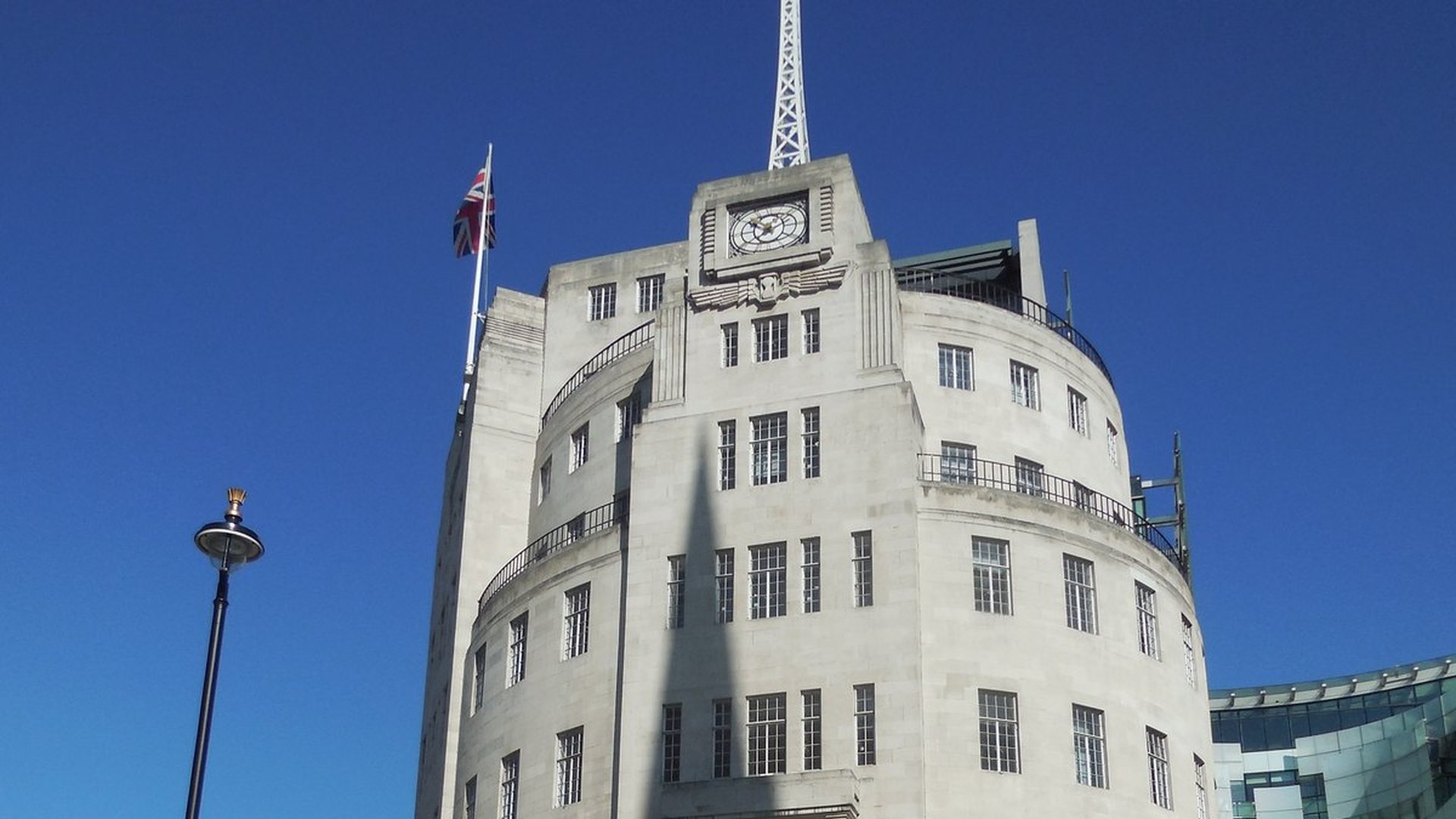
A federal judge in Florida has ruled that President Donald Trump's $10 billion defamation lawsuit against the BBC can proceed. US District Judge Jeffrey T. Kuntz, sitting in the Southern District of Florida, denied the broadcaster's motion to dismiss the defamation claim in a 40-page order issued on Tuesday 10 November 2026 — while dismissing a second, separate claim under Florida consumer protection law.
The ruling is an early, procedural decision. It does not find that the BBC defamed Trump, and it does not award him anything. What it does is keep the case alive: the BBC must now answer the defamation claim in court, and the case moves toward discovery, depositions and a possible trial. The $10 billion figure is the amount Trump is seeking. No court has awarded it, and the judge made clear that Trump must still prove his case.
What the case is about
The lawsuit, filed in December 2025 in Florida federal court, centres on a BBC Panorama documentary, "Trump: A Second Chance", which aired a week before the 2024 US presidential election. Trump alleges that the programme spliced together two separate sections of the speech he gave on 6 January 2021, before the attack on the US Capitol — one section in which he told supporters to march on the Capitol, and another in which he said "fight like hell". Presented together, the suit says, the edit created a false and misleading impression that he encouraged the attack.
The BBC has acknowledged that the edit was misleading and has apologised to Trump. It denies, however, that the edit amounts to defamation, and it asked the court to dismiss the case. The documentary was never broadcast in Florida — a point the judge noted, because Trump will have to show that the broadcast actually cost him something in the state where he sued.
The case is formally President Donald J. Trump v. British Broadcasting Corp., No. 1:25-cv-25894. The BBC's motion, filed on 24 August 2026, asked the court to dismiss the First Amended Complaint with prejudice, arguing both that the Florida court lacked personal jurisdiction over the BBC and that the complaint failed to state a claim.
What the judge decided
Judge Kuntz's order, signed in Fort Lauderdale, made three directions. First, the defamation claim — Count I, defamation per se — survives: the motion to dismiss it was denied. Second, the claim under Florida's Deceptive and Unfair Trade Practices Act — Count II — was dismissed, because the court held that the documentary was not commercial speech. Third, the BBC must file its answer to the surviving defamation claim by 1 December 2026.
The reasoning turned on the standard that applies at the earliest stage of a lawsuit. At the motion-to-dismiss stage, the court does not decide whether the claims are true. It asks whether the complaint, taken as pleaded, states a claim that could succeed. On that test, Judge Kuntz wrote, the editing "may independently establish the plausibility of actual malice" — the standard a public figure must meet in an American defamation case.
Actual malice is a high bar. Because Trump is a public figure, he must prove not only that the broadcast was false and harmful, but that the BBC published it knowing it was false, or with reckless disregard for whether it was false. The judge found that Trump had plausibly pleaded that — that the broadcaster harmed his reputation while being aware, or negligent, that the footage was deceptive. Whether he can prove it, the judge wrote, "is left for another day".
The judge also found that the Florida court has personal jurisdiction over the BBC, and that Trump had sufficiently pleaded reputational harm ahead of the 2024 election. But he was explicit about what the ruling does not do. "Whether President Trump can prove these claims and establish he sustained damages at summary judgment or trial is left for another day," he wrote. The ruling is not a finding on the merits.
The deposition deadline
Separately, the case carries a deadline that falls on Trump himself. On 22 October, Magistrate Judge Enjoliqué Lett ordered Trump to sit for a sworn deposition — answering questions under oath from BBC lawyers — by 11 December 2026, or face sanctions that could include dismissal of the lawsuit. The order followed the cancellation of an October 16 deposition date by Trump's lawyers. Unless the period for collecting evidence is extended, the deposition must happen within a month of the judge's ruling.
That deadline matters because defamation cases turn on what the plaintiff knew and when. A deposition would put Trump under oath about the broadcast, its effect on him, and the damages he claims. It is a routine step in American litigation — but for a sitting president, it is an unusual one.
What happens next
The case now moves into discovery, the phase in which both sides exchange documents and take testimony. The BBC must file its formal answer to the defamation claim by 1 December. After discovery, either side may ask the court to decide the case without a trial, through summary judgment motions. A two-week trial is provisionally scheduled for 15 February 2027, though that date may move as the case develops.
Both sides have reason to be cautious about the outcome. For Trump, the ruling keeps alive a case that could produce a large damages award — or could end in a summary judgment against him if he cannot prove actual malice and actual damages, particularly given that the documentary was not broadcast in Florida. For the BBC, the ruling means a long and expensive defence of an edit it has already admitted was misleading, in a foreign court, against a sitting president.
The case is also one of several Trump has filed against news organisations, as part of a wider pressure campaign against coverage he dislikes. Its outcome will be watched well beyond the parties: it tests how far American defamation law reaches when the defendant is a foreign public broadcaster, the programme aired abroad, and the plaintiff is the president.
For now, the only thing decided is that the case goes on. The questions that matter — was the edit malicious, and did it cost Trump anything — are still to be answered, in discovery, in depositions, and possibly at trial in February.
🔗 See also
Frequently asked questions
What did the judge decide in Trump's BBC lawsuit?
On 10 November 2026, US District Judge Jeffrey T. Kuntz denied the BBC's motion to dismiss President Trump's defamation claim, so the $10 billion case can proceed. He dismissed a second claim under Florida's Deceptive and Unfair Trade Practices Act, ruling the documentary was not commercial speech.
What is the lawsuit about?
Trump sued the BBC in December 2025 over a Panorama documentary, 'Trump: A Second Chance', which he says spliced together two separate sections of his 6 January 2021 speech — telling supporters to march on the Capitol, and saying 'fight like hell' — creating a misleading impression that he encouraged the Capitol attack.
Has the BBC admitted the edit was misleading?
Yes. The BBC has acknowledged the edit was misleading and has apologised to Trump. It denies, however, that the edit amounts to defamation, and it asked the court to dismiss the case.
Does the ruling mean Trump has won?
No. The ruling is a procedural decision at the earliest stage of the case. It means only that the defamation claim can proceed. Trump must still prove actual malice — that the BBC knew the broadcast was false or acted with reckless disregard — and that he suffered actual damages.
What is actual malice?
Actual malice is the standard a public figure must meet in an American defamation case. The plaintiff must prove the defendant published a false statement knowing it was false, or with reckless disregard for whether it was true. It is a deliberately high bar, designed to protect free speech about public figures.
What is the case number and which court is hearing it?
The case is President Donald J. Trump v. British Broadcasting Corp., No. 1:25-cv-25894, in the US District Court for the Southern District of Florida. Judge Jeffrey T. Kuntz issued the 10 November 2026 ruling.
What happens next in the case?
The BBC must file its answer to the defamation claim by 1 December 2026. The case then moves into discovery, and a two-week trial is provisionally scheduled for 15 February 2027. Either side may also seek summary judgment before trial.
Does Trump have to give a deposition?
Yes. Magistrate Judge Enjoliqué Lett ordered Trump to sit for a sworn deposition by 11 December 2026, or face sanctions that could include dismissal of the lawsuit, unless the evidence-collection period is extended.
How much money is Trump seeking?
Trump is seeking $10 billion. That is the amount claimed in the lawsuit, not a sum any court has awarded. Any damages would have to be proved at trial.
Sources
- Associated Press via Astig: Trump's $10 billion BBC defamation case can proceed, a Florida judge rules (11 Nov 2026)
- Corp-Intl: Trump BBC lawsuit — judge refuses to dismiss $10bn claim (11 Nov 2026)
- US Times Mirror: Federal judge denies motion to dismiss Trump's defamation case against the BBC (11 Nov 2026)
Facts checked against Associated Press reporting and court reporting of the 10 November 2026 order in Trump v. British Broadcasting Corp., No. 1:25-cv-25894 (S.D. Fla.). The ruling decides only that the defamation claim may proceed; it is not a finding that Trump proved his claims.