Hakeem Jeffries Nominated as First Black House Speaker
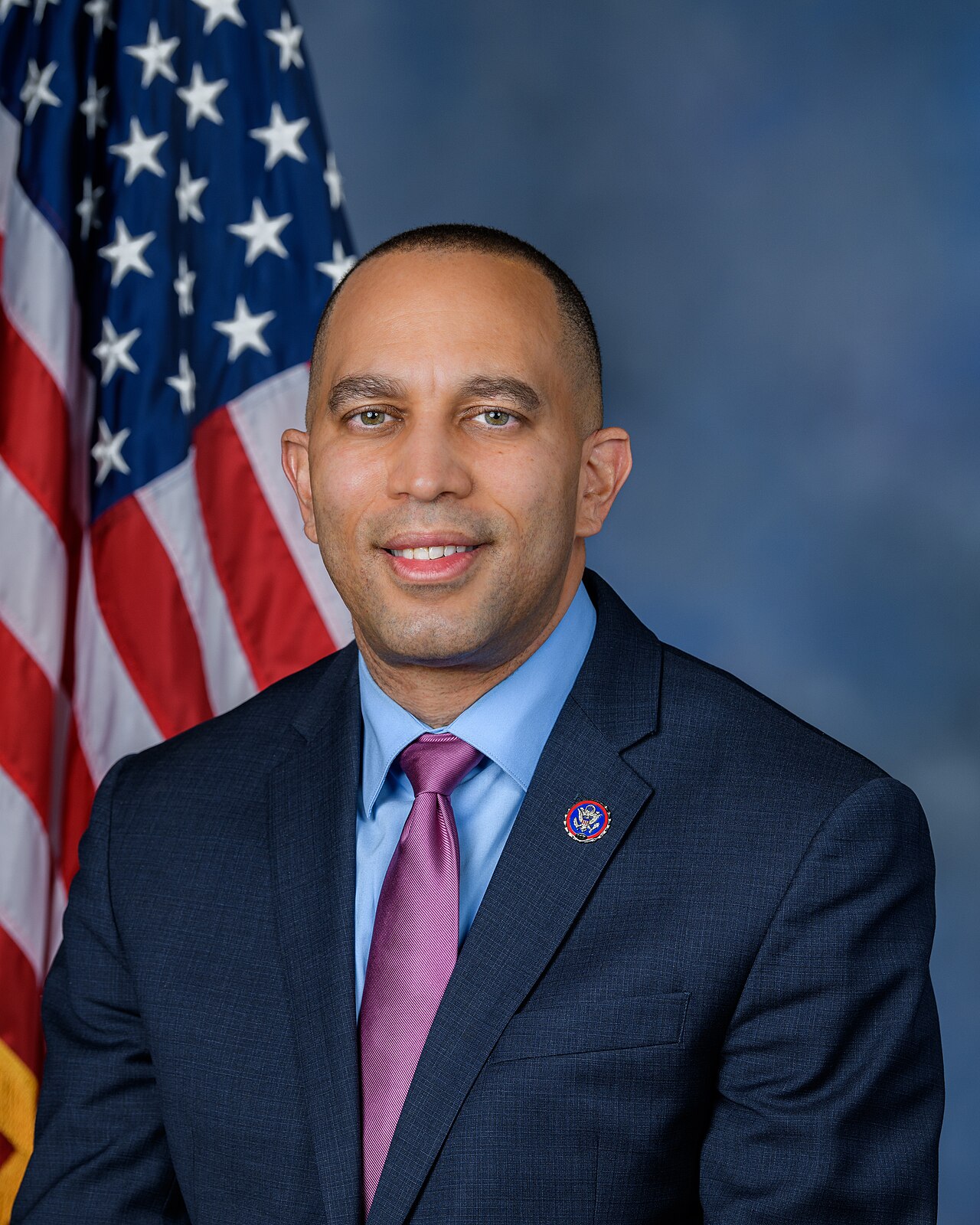
What happened: On Wednesday 18 November 2026, House Democrats nominated Hakeem Jeffries to be the next Speaker of the House, in a closed-door secret-ballot vote of the incoming House Democratic Caucus. Jeffries won 251 votes to 11, with 262 votes cast. If the full House elects him when the new Congress convenes on 3 January 2027, he would be the first Black Speaker in US history.
House Democrats have chosen their candidate for the most powerful job in the chamber. On Wednesday 18 November 2026, the incoming House Democratic Caucus nominated Hakeem Jeffries to be Speaker of the House, putting the New York congressman one step away from a historic first. If the full House elects him when the new Congress convenes on 3 January 2027, Jeffries would become the first Black Speaker in the history of the United States.
The nomination came in a closed-door meeting of the caucus, decided by secret ballot. It was not a close contest. Jeffries won 251 votes to 11, a margin that showed the caucus lining up behind its leader as Democrats prepare to take control of the House after winning it back in the midterm elections of 3 November 2026.
The Vote in Numbers
The numbers from the caucus vote tell the story plainly. Jeffries received 251 votes. Eleven votes went against him. In total, 262 votes were cast, including votes from members-elect — newly elected representatives who will take their seats in January — and from House delegates, who take part in the caucus vote even though they do not vote on the House floor.
A margin of 251 to 11 is a decisive result by any measure. It means that more than nineteen out of every twenty votes cast went to Jeffries, and it leaves little doubt about where the caucus stands as it moves into the majority. The eleven votes against him show that the decision was not unanimous, but they do not change the outcome: the caucus has a nominee, and it is Jeffries.
The nomination was put forward by five Democrats spanning the caucus, a group chosen to show breadth of support across its different wings. Among them was freshman Rep.-elect Rebecca Bennett of New Jersey, one of the newly elected members who will join the House in January. Other new members-elect who signed on as nominators were Darializa Avila Chevalier of New York, Adam Hamawy of New Jersey, Frederick Haynes of Texas, Melat Kiros of Colorado, Donavan McKinney of Michigan, Chris Rabb of Pennsylvania and Claire Valdez of New York.
Jeffries does not lead alone. Katherine Clark of Massachusetts and Pete Aguilar of California serve alongside him in the leadership trio that runs the Democratic side of the House, and they remain part of the leadership as the party moves into the majority.
The backdrop to the vote is the result of the midterm elections held on 3 November 2026. Democrats won the House in those elections, and they will hold at least 257 seats in the new Congress. That number is important, because the Speaker is elected by the whole House, not only by one party. A candidate needs 218 votes on the floor to win. With at least 257 Democrats in the chamber, Jeffries has a clear cushion above that threshold, provided his party's members vote together on 3 January.
Who Is Hakeem Jeffries
Hakeem Jeffries represents New York's 8th congressional district, which covers parts of Brooklyn and Queens in New York City. He has represented the district in the House of Representatives since 2013, and he has led House Democrats since January 2023, when he succeeded Nancy Pelosi as the party's leader in the chamber.
Jeffries was already a historic figure before this nomination. When he became House Democratic leader in January 2023, he was the first Black lawmaker ever to lead a party in Congress — in either the House or the Senate. That record, set nearly four years ago, is now the foundation for the next one: if the full House elects him in January, he will add the speakership to the list of firsts.
His path to the nomination runs through the leadership he has held since 2023. As Democratic leader, Jeffries has been the highest-ranking Democrat in the House and the public face of the party in the chamber, speaking for the caucus in debates, in negotiations and in public. He was elected to the leadership post by his colleagues after Pelosi stepped down from the role, and he has held it through the period in which Democrats were in the minority, including the 119th Congress.
The district he represents is part of the story of who he is as a politician. New York's 8th district takes in neighbourhoods in Brooklyn and Queens, two of the most diverse boroughs in the country, and the congressman who represents it has built his career in the politics of that part of New York City. The nomination does not change his district: he will continue to represent the 8th district in the House, while also holding the Speaker's chair if he is elected to it.
What the Speaker Does
The Speaker of the House is the presiding officer of the House of Representatives and one of the most powerful offices in American government. The Speaker runs the business of the chamber: presiding over its sessions, recognising members who wish to speak, putting questions to a vote, and keeping order in debates. The way the House spends its time — which bills come to the floor, and in what order — runs through the Speaker's office.
The Speaker also leads the majority party's work in the House. The person who holds the chair is the leader of the party that controls the chamber, and the Speaker's job is to turn that party's legislative plans into votes on the floor. That means working with committee chairs, with the rest of the party leadership and with members across the caucus to build support for the bills the majority wants to pass.
Beyond the chamber itself, the Speaker holds a place in the line of succession to the presidency. The Speaker is second in line to the presidency, after the Vice President. That constitutional position is part of why the office carries such weight: the Speaker is not only the leader of one half of Congress, but also the person who would step in if both the President and the Vice President were unable to serve.
The Speaker is elected by the full House, not by one party alone. Every member votes, and the winner needs 218 votes. That is why the caucus nomination matters, and also why it is not the final word: the nomination settles who the Democrats will put forward, but the election on the floor is the vote that actually fills the office.
What Happens on 3 January
The next step is set by the calendar. The new Congress convenes on 3 January 2027, and on that day the full House will vote to elect its Speaker. The vote takes place on the floor of the House, with every member voting, and it is the first order of business for the new Congress. Until that vote is held, the office of Speaker remains to be filled.
Jeffries goes into that vote as the Democrats' nominee, with the backing of the caucus vote behind him. He needs 218 votes on the floor. Democrats will hold at least 257 seats in the new House, after winning the chamber in the midterm elections of 3 November 2026. If the party's members vote together, as the 251-to-11 caucus result suggests they will, he will clear the threshold with votes to spare.
The floor vote is a roll-call vote, taken member by member, and it is held in public. That is different from the caucus vote on 18 November, which was a closed-door secret ballot. In January, each member's choice will be on the record. The public nature of the vote is part of what makes it the decisive moment: the caucus nomination shows where the party stands in private, and the floor vote shows it in public.
Why It Matters
The nomination matters first because of what it would mean for the office itself. The Speaker of the House is one of the three most senior offices in the federal government, alongside the President and the Vice President, and it is the only one of the three that is chosen by the House itself. That a Black lawmaker is now the nominee for that office, with the votes to win it, is a first in the history of the United States.
It matters, too, because of what it says about the House that will sit in January. Democrats won the chamber in the midterm elections of 3 November 2026, and the caucus that will hold the majority chose Jeffries by an overwhelming margin. The 251-to-11 vote, with the support of new members-elect from across the country, shows a party that has settled on its leader before the new Congress even meets. The leadership trio of Jeffries, Clark and Aguilar will carry the party from the minority into the majority without a change at the top.
Finally, it matters because of the history it would make. Jeffries was already the first Black lawmaker to lead a party in Congress when he became Democratic leader in January 2023, succeeding Nancy Pelosi. The speakership would be the next step in that story, and a larger one: the leader of a party becomes the leader of the whole House. If the full House elects him on 3 January 2027, Hakeem Jeffries will hold an office no Black American has held before, and the House will have a Speaker who looks like the country it represents in a way it never has before.
Frequently Asked Questions
Who nominated Hakeem Jeffries for Speaker of the House?
House Democrats nominated Hakeem Jeffries for Speaker on Wednesday 18 November 2026, in a closed-door secret-ballot vote of the incoming House Democratic Caucus. He won 251 votes to 11, with 262 votes cast, including members-elect and House delegates.
When will the full House vote for Speaker?
The full House will vote for Speaker when the new Congress convenes on 3 January 2027. The nomination by House Democrats is the party's choice for the post; the election itself takes place on the House floor on that day.
How many votes does Hakeem Jeffries need to become Speaker?
He needs 218 votes on the House floor to be elected Speaker. Democrats will hold at least 257 seats in the new House after winning the House in the 3 November 2026 midterm elections.
Why would Hakeem Jeffries be the first Black Speaker?
No Black lawmaker has ever held the post of Speaker of the House. If the full House elects Jeffries on 3 January 2027, he would be the first Black Speaker in US history.
Who is Hakeem Jeffries?
Hakeem Jeffries represents New York's 8th congressional district, covering parts of Brooklyn and Queens. He has been House Democratic leader since January 2023, succeeding Nancy Pelosi, and he was already the first Black lawmaker to lead a party in Congress.
Who nominated Jeffries, and who serves alongside him in leadership?
He was nominated by five Democrats spanning the caucus, including freshman Rep.-elect Rebecca Bennett of New Jersey. Other new members-elect who signed on were Darializa Avila Chevalier of New York, Adam Hamawy of New Jersey, Frederick Haynes of Texas, Melat Kiros of Colorado, Donavan McKinney of Michigan, Chris Rabb of Pennsylvania and Claire Valdez of New York. Katherine Clark of Massachusetts and Pete Aguilar of California serve alongside Jeffries in the leadership trio.
What does the Speaker of the House do?
The Speaker presides over the House of Representatives, recognises members to speak, puts questions to a vote, and leads the majority party's work in the chamber. The Speaker is also second in line to the presidency, after the Vice President.
Does the nomination mean Jeffries is already Speaker?
No. The nomination is the decision of the House Democratic Caucus. Jeffries becomes Speaker only if the full House elects him on 3 January 2027, when the new Congress convenes.
Related Reading
- Democrats' 2026 Midterm Win: Mamdani's Story — our report on the Democrats' wins in the 3 November 2026 elections, the night that gave the party the House majority.
- Scott Colom: Mississippi's First Black Senator Since 1881 — another historic first from the 2026 elections — Mississippi's first Black senator since 1881.
Sources
- Reuters — Democrats nominate Hakeem Jeffries for next US House Speaker — the 18 November nomination, the 251–11 secret-ballot vote and the 3 January floor vote.
- AP — Hakeem Jeffries could become the first Black House Speaker after Democratic nomination — the nomination, the historic first at stake and the 218 votes needed on the House floor.
This article was published on 19 November 2026 and reports the nomination of Hakeem Jeffries on 18 November 2026. The full House vote for Speaker is scheduled for 3 January 2027, when the new Congress convenes. This article is general information, not legal or political advice — verify the latest developments with official sources.